

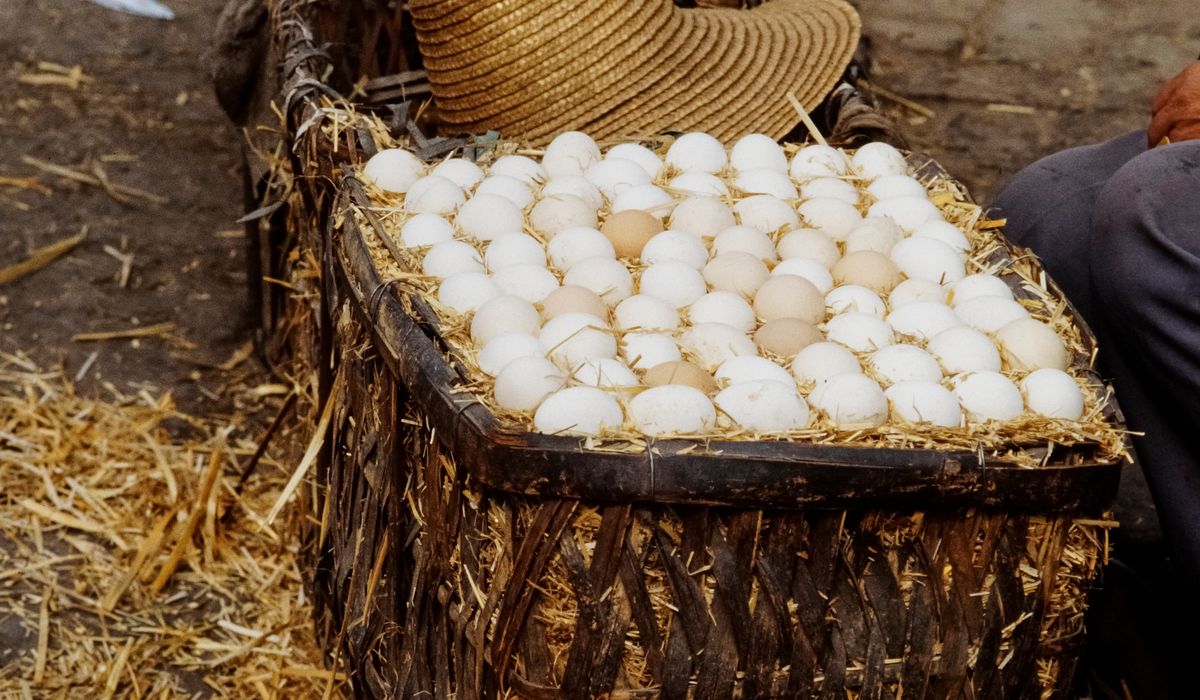
Why Winter Changes What Your Flock Needs
Come the first proper cold snap, your hens will tell you something has changed. They will eat more, drink less, and spend a good deal of the morning standing about looking put out. That shift is worth taking seriously, because a hen does not simply feel the cold the way we do — she burns fuel to fight it.
In mild weather a laying hen eats roughly 120g of feed a day. Once the temperature drops towards freezing, that figure can climb by a fifth or more, purely because she is using energy to keep her core temperature up. Add a moult, a bit of wind, or a damp run and the demand goes higher still.
So the winter feeding question is not really about giving them more food. It is about giving them the right food, in the right form, at the right time of day — and being honest about what a treat actually costs them.
Start With a Proper Layers' Pellet, and Keep It Full
Everything else in this article sits on top of one simple foundation: a good-quality compound feed, available all day, every day.
- Choose a layers' pellet or mash with around 16–17% protein, formulated for laying birds. Pellets are usually the better bet in winter because hens cannot pick and choose between ingredients, so every mouthful is a balanced one.
- Feed ad libitum. Do not ration it. In cold weather a hen that has to wait for her breakfast will simply go without the energy she needs.
- Top up the hopper in the afternoon as well as the morning. Hens do a lot of their eating in the last hour before roosting, and that food carries them through the coldest part of the night.
- Store your feed properly. Damp feed goes mouldy fast in a British winter. Keep sacks in a cool, dry, rodent-proof bin and use it within a couple of months.
If your birds are moulting, or you keep a hardy breed that lays right through, a slightly higher-protein ration — around 18% — will help them regrow feathers and hold condition without stripping fat reserves.
Scattered Corn: Useful, But Only in Moderation
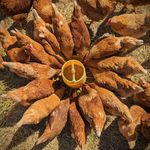
Mixed corn is the classic winter comfort food, and it does have a place. It is high in carbohydrate, which means quick energy, and a small scatter warms the birds up both nutritionally and in spirit.
But corn is low in protein and low in the vitamins and minerals a laying hen needs. Feed too much and you get fat hens, poor shells, lower production, and a flock that appears well fed but is quietly undernourished.
- Treat it as a supplement, not a meal. Roughly a small handful per bird, no more than 10–15% of the overall diet.
- Scatter it late afternoon, an hour or so before they roost. The slow release of energy overnight is exactly what you want.
- Scatter it on the ground, not in a trough, so the birds have to move about and scratch — that generates warmth too.
- Skip it on mild, wet days when the birds are already finding plenty of calories.
If you want to ring the changes, wheat and oats work similarly as scratch grains. Just keep the total the same.
Warm Mash on Frosty Mornings
There is a reason old poultry keepers swear by a warm mash, and it is not just sentiment. Cold water and cold pellets take energy to digest. A mash served at blood temperature is easy to eat, easy to digest, and it gets liquid into birds who often cannot be bothered to drink on a freezing morning.
Making it is straightforward. Crush or soak your layers' pellets in hot water — from the kettle is fine, but let it cool so it is warm rather than scalding — until it forms a crumbly, porridge-like consistency. Feed it in a clean trough straight away, and remove anything uneaten after twenty minutes so it does not sour.
You can add a small handful of rolled oats, a pinch of poultry spice or a little dried seaweed meal. Do not add sugar or honey; it does nothing useful and soils the drinkers. And never use a warm mash as a replacement for the day's pellets — it is a supplement, and a morale booster on a hard morning.
Water, Grit and Oyster Shell: The Things People Forget
A hen will happily go without food for a day, but she will not lay without water. In freezing weather, a solid block of ice in the drinker is one of the most common causes of a sudden drop in laying.
- Check drinkers twice a day — early morning and again before dusk — and break the ice or refill with fresh.
- Use a dark-coloured drinker placed in a sheltered spot; it will thaw faster and freeze later than a pale one in an exposed run.
- Float a small rubber ball or similar in the drinker to keep a patch of water moving.
- Always offer insoluble grit and oyster shell in separate hoppers. Hens not out ranging need the grit to digest grain, and the shell to build eggshells from limited calcium.
If you have electricity near the run, a heated drinker base is money well spent. If not, two drinkers swapped over each morning works nearly as well.
Watch the Birds, Not Just the Bag
Feeding by numbers will only take you so far. Once a week, pick up a hen and feel her breastbone. A well-conditioned bird has a slight, firm covering over it; a sharp ridge means she is losing weight and needs more, while a soft, bulging chest means the corn has got the better of her.
Keep an eye on droppings, shell quality and how eagerly they come to the trough. A sudden loss of appetite in a single bird is a health problem, not a feeding one, and worth investigating on its own.
Finally, remember that winter laying slows for reasons food cannot fix. Short daylight hours suppress ovulation far more than cold does, and a hen moulting in November is simply doing what hens do. Feed them well, keep the water flowing, add light only if you genuinely need winter eggs, and let the flock rest. A hen that goes into spring in good condition will pay you back with a full basket.


John Doe
14 January, 2022Having no content in post should have adverse..
Chauffina Carr
10 April, 2022We use these tests all time! Killer stuff!
Jim Séchen
16 July, 2022Thanks for all the comments, everyone!