

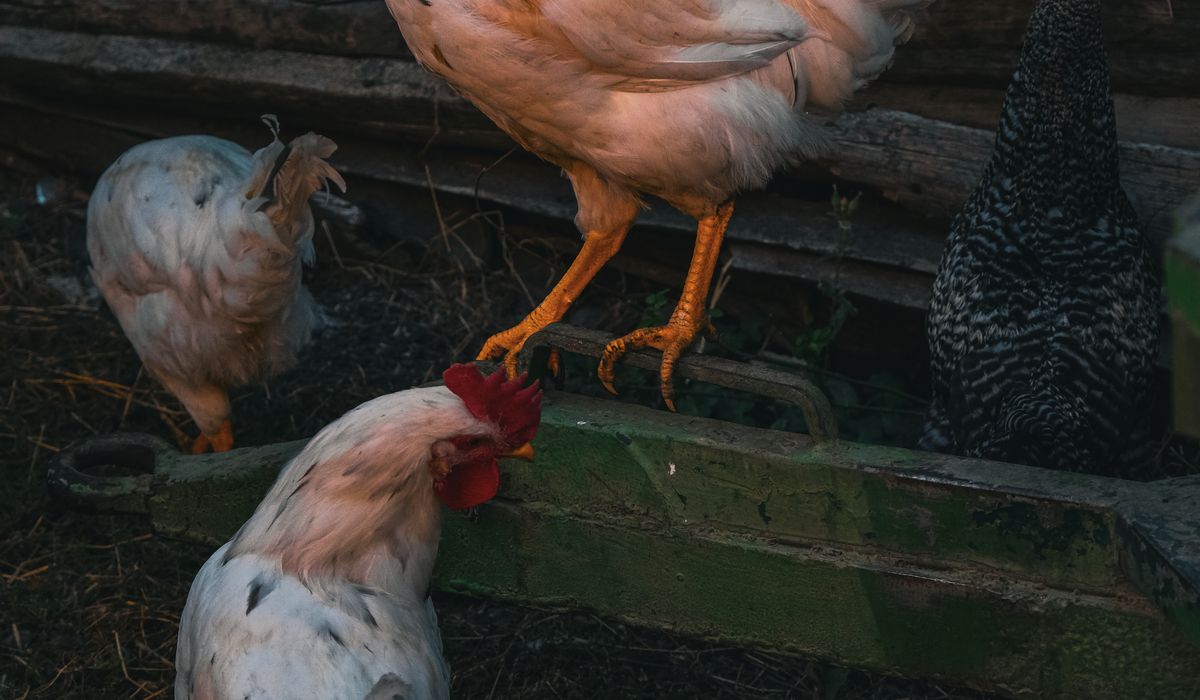
Learn What Normal Looks Like
Chickens are descended from jungle fowl, and they still behave like prey animals: when something is wrong, they hide it. By the time a hen looks obviously poorly, she has often been struggling for days. The most useful skill you can develop as a poultry keeper is not spotting disease — it is knowing your birds so well that a small change stands out.
Spend five minutes a day just watching. A healthy hen is alert, bright-eyed and stands with her tail up. Her comb is plump, and a good red in a laying bird or pale pink in a pullet not yet in lay. She eats with purpose, dust-bathes, and has opinions about the pecking order. Note her normal comb colour, her usual appetite and where she likes to roost. That baseline is worth more than any chart.
The Daily Once-Over
Do your check at the same times each day — ideally when you let the flock out in the morning and again at lockdown. It takes two minutes and catches most problems early.
- Posture and wings. Droopy wings held away from the body, a hunched back or a tucked head are classic early warnings. So is a hen sitting in a corner while the others forage.
- Tail position. A tail held low or pointing down, rather than jaunty and upright, often means she is uncomfortable.
- Feathers. Puffed-up, fluffed-out feathers on a warm day suggest she is cold, in pain or running a temperature. Do remember, though, that a tatty hen in autumn is usually just moulting — that is normal and not illness.
- Movement. The last bird to the feeder, or one lagging behind on the walk back to the coop, is worth a closer look.
- Behaviour. A hen staying on the roost through the day, or standing apart from her flockmates, is telling you something.
Reading the Comb, Face and Vent
The comb and wattles are a genuine health indicator, so get into the habit of looking at them closely.
- Pale, washed-out or white comb. Usually anaemia — think red mite or a heavy worm burden.
- Purple or blue tinge. Poor circulation, heart trouble or a serious respiratory infection. This needs veterinary advice promptly.
- Swollen face, foamy or crusty eyes, runny nostrils, head shaking. Respiratory infection, and often contagious to the rest of the flock.
- Vent. Check at night under torchlight. Matted, pasty feathers around the vent point to worms, mites or vent gleet. Prolapsed red tissue is an emergency — keep it clean and damp and ring your vet straight away.
- Legs. Raised, crusty, rough-looking scales mean scaly leg mite. A swollen footpad with a black scab is bumblefoot, common where perches are hard or the ground is rough.
Behaviour, Appetite and Droppings
Feed and water intake tells you a great deal. A sudden drop in eating, or a hen who ignores treats she would normally mug you for, is a red flag. So is weight loss: run your fingers along her keel bone. It should feel rounded and well padded, not like a sharp ridge.
Droppings are one of the best diagnostic tools you have, but do not panic at every loose one. Hens produce caecal droppings — brown, loose and remarkably pungent — usually first thing in the morning. That is perfectly normal. Watch instead for:
- Watery droppings that stay yellow or green
- Blood or mucus in the droppings, especially in young birds (possible coccidiosis)
- Undigested feed passing through whole
- Visible worms
- Chalky white droppings with no solid matter
Also check the crop, the pouch at the base of the neck. At bedtime it should feel full but soft; by morning it should be empty. A hard, doughy crop suggests an impaction, while a squishy, gurgling crop and sour-smelling breath point to sour crop.
Five Common Problems Worth Knowing
- Red mite. Grey, ash-like dust under perches and in cracks that turns red when squashed. Causes anaemia, pale combs and a reluctance to roost. Check with a torch after dark.
- Worms. Weight loss, pale comb, dirty vent feathers and a dip in laying.
- Respiratory infection. Sneezing, gurgling, swollen sinuses. Isolate early and seek advice, as it spreads quickly through a flock.
- Egg peritonitis and soft shells. A hunched, penguin-like stance with a low tail and laboured breathing. This is serious and needs a vet.
- Bumblefoot. A swollen foot with a dark scab, causing limping. Often a housing or perch problem as much as an infection.
When to Isolate and Call the Vet
Some situations need action today: a bird not eating, a sharp keel bone, a purple comb, laboured breathing, a prolapse or a hen who cannot stand. Move her to a quiet, dim, warm crate with food and water. Where you can, keep her within sight and sound of the flock — hens are social, and isolation alone is stressful. A calm companion, if you have one, often helps more than a solitary box.
Make notes as you go: when you first noticed the change, what you have seen, appetite, droppings and laying. That information is genuinely useful to a vet. It is also worth finding a poultry-friendly practice before you need one, as not every surgery routinely sees chickens.
Most of all, trust your instincts. If a hen looks wrong to you, she usually is, and the keepers who save birds are the ones who act on a small worry rather than waiting for a big one.



John Doe
14 January, 2022Having no content in post should have adverse..
Chauffina Carr
10 April, 2022We use these tests all time! Killer stuff!
Jim Séchen
16 July, 2022Thanks for all the comments, everyone!